Reading Time: 7 minutes
An interaction design portfolio is more than a gallery of polished screens. Hiring managers want to see how you think, how you solve problems, and how you make digital experiences easier to use. A strong portfolio shows your process, not just your final visuals.
If you want to get hired, your portfolio needs to do two things at once: look professional and tell a clear story. It should help employers quickly understand your strengths while also proving that you can design with purpose. That balance is what makes a portfolio stand out in a crowded field.
What Employers Want to See
Most hiring teams are not just looking for pretty interface mockups. They want evidence that you can think through user behavior, structure interactions, and make decisions with clarity. They also want to understand how you work with constraints, feedback, and iteration.
A great portfolio answers questions before they are even asked. What problem were you solving? Why did you make those choices? What changed after testing? The more clearly you can answer those questions, the stronger your portfolio becomes.
How to Build a Portfolio That Works
1. Start with one clear positioning statement

Your portfolio should immediately tell people what kind of designer you are becoming. Are you focused on app design, product interaction, UX research, or interface systems? If your positioning is too vague, your portfolio will feel harder to remember.
A simple line at the top can help. For example, you might say that you design clear, intuitive digital experiences for mobile products, or that you focus on making complex systems feel simple. That kind of clarity helps hiring managers place you faster.
2. Lead with 3 to 5 strong projects
You do not need 15 projects. In fact, too many projects can weaken your portfolio if the quality is uneven. It is better to show a small group of strong case studies than a long list of unfinished or repetitive work.
Choose projects that show range but still feel consistent. Include at least one project that shows product thinking, one that shows visual refinement, and one that shows how you handle interaction decisions. That combination usually gives employers a useful first impression.
3. Show the process, not just the final screens
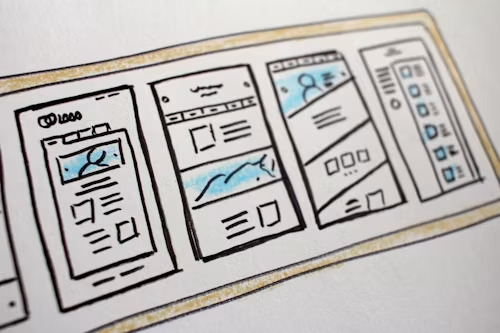
Interaction design is about decision-making. That means your portfolio should include research, sketches, flows, wireframes, testing, and final solutions. Even simple process snapshots can help employers understand how you think.
This is where many portfolios fall short. They show the polished result but hide the work behind it. A better portfolio reveals the logic behind your choices and demonstrates that you know how to move from problem to solution.
4. Write case studies that tell a story
Each project should feel like a short story with a beginning, middle, and end. Start with the problem, explain your approach, show the work, and close with outcomes or reflections. That structure makes your case studies easier to read and more persuasive.
Avoid writing in a vague or overly formal style. Be direct about what you did, what changed, and what you learned. Clear writing makes your work feel more credible and more human.
5. Focus on interaction decisions
A strong interaction design portfolio should highlight the moments where user behavior matters. Show how you handled navigation, feedback, transitions, onboarding, microinteractions, and edge cases. These are the details that make digital products feel intuitive.
If you can explain why one flow is better than another, you immediately look more thoughtful. Employers want to see that you care about how people move through a product, not just how it looks on a screen.
6. Include collaboration and feedback

Interaction design rarely happens alone. It often involves feedback from other designers, developers, researchers, and stakeholders. Including collaboration in your portfolio helps employers see that you can work well in real team settings.
You can mention how feedback changed your design or how you adapted your ideas after testing. That kind of detail shows flexibility and maturity. It also makes your portfolio feel more realistic and less like a perfect highlight reel.
7. Make the portfolio itself a strong design piece
Your portfolio is also a product. If the navigation is confusing or the layout is cluttered, that sends the wrong message. Employers will often judge your attention to detail based on the portfolio experience itself.
Keep the layout clean, the typography readable, and the navigation simple. Make it easy for someone to find your work, understand your story, and contact you without friction. Good portfolio design should feel calm, confident, and easy to scan.
Common Mistakes to Avoid
One of the biggest mistakes is showing only final screens without context. Another is including too many projects that are visually similar. You also want to avoid writing case studies that are too long, too vague, or too technical without explanation.
Another common problem is making the portfolio about you instead of your work. Employers care about your personality, but they care more about whether you can solve design problems. Keep the balance focused on usefulness and clarity.
What a Strong Portfolio Should Include
A strong interaction design portfolio usually includes:
- A clear introduction.
- 3 to 5 case studies.
- Process documentation.
- Visual examples of flows, wireframes, and final screens.
- Short explanations of your design decisions.
- Contact information that is easy to find.
You do not need to add every project you have ever made. You only need enough work to show that you understand interaction design and can communicate it well.
The Bottom Line

A portfolio that gets you hired is clear, focused, and thoughtful. It shows not only what you made, but how you think, how you solve problems, and how you work with others. That is what hiring teams are looking for when they review interaction design candidates.
If you want to stand out, do not try to impress with quantity. Build a portfolio that is easy to understand, easy to remember, and honest about your process. That is often what gets the interview.
Ready to Improve Your Portfolio?
Start by choosing your best three projects and rewriting them as case studies. Then review the portfolio itself as if you were the hiring manager. If the story is clear and the design feels intentional, you are already on the right track.
Related resources: