Reading Time: 7 minutes
Photo source: Unsplash – Team collaboration in a modern workspace
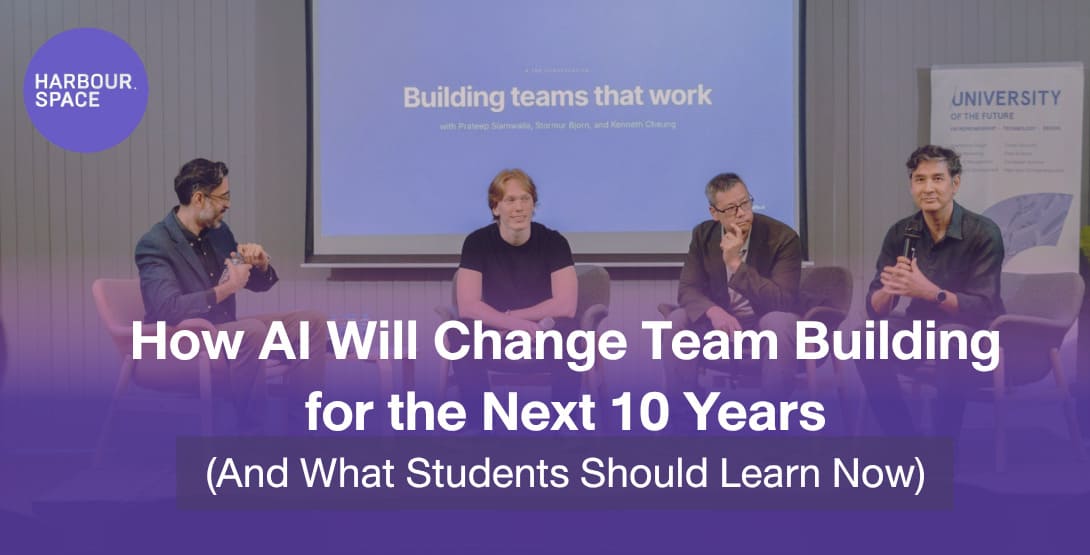
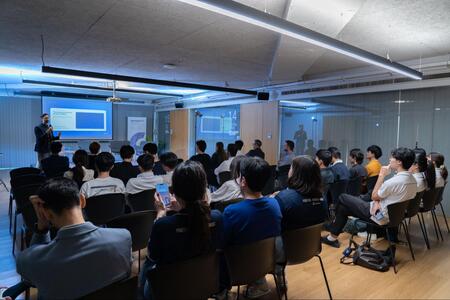
Harbour.Space@UTCC recently collaborated with
happily.AI on a talk about building teams that work. This partnership isn’t just about today—it’s a preview of what’s coming for the next decade. As AI becomes central to how teams communicate, plan, and execute, students need to start learning these skills now.[
harbourspace.utcc.ac][
youtube]
The question isn’t whether AI will change team building. It already has. The real question is: are you preparing for the next 10 years or just reacting to today?
Why This Matters for Students Right Now
Most students think AI is just a tool for writing essays or automating tasks. But the biggest shift isn’t about productivity—it’s about
how teams function.
According to MIT research that heavily influenced Happily.ai’s approach, strong workplace relationships directly correlate with high performance. Happily.ai leverages AI to transform workplace culture by fostering behavioral changes and building resilient systems. Their platform uses AI to power how organizations understand people and drive meaningful feedback loops.[happily][youtube]
For students entering the workforce in 2027, 2028, or 2030, this means:
- Teams will be smaller but more powerful because AI handles coordination
- Communication will shift from meetings to AI-driven async updates
- Leadership will require AI literacy, not just human skills
- Team culture will be measured with data, not just vibes
This isn’t distant futurology. Happily.ai is already working with companies across Asia and the US, with onboarding taking less than two weeks. The infrastructure is here. The next decade will be about scaling it.[
youtube][
happily]
The 5 Biggest AI Changes to Team Building (2026–2036)
1. AI Will Replace Traditional Team Meetings
Photo source: Unsplash – Modern meeting with technology
By 2030, routine team meetings will be largely replaced by AI summaries. Instead of 60-minute syncs, teams will use AI tools that:
- Automatically document decisions
- Generate action items
- Track progress without manual updates
- Send personalized nudges to team members
This matches Happily.ai’s approach to using AI to create meaningful feedback loops that people want to participate in. The result: teams spend less time talking and more time building.[
youtube]
What students should learn: async communication skills, AI tool literacy, and how to write clear updates that AI can summarize.
2. Team Performance Will Be Measured with Real Data
Currently, most teams measure performance through self-reported surveys or manager opinions. AI will change this by providing:
- Real-time sentiment analysis
- Engagement metrics at the individual level
- Predictive analytics for turnover risk
- Culture health scores based on actual behavior
Happily.ai already has “the most fine-grained people analytics in the world, getting real-time, reliable data on people”. This means managers can proactively help retain employees before they leave, rather than reacting after the problem occurs.[
youtube]
What students should learn: how to interpret people analytics, understand data-driven team management, and use AI dashboards for performance tracking.
3. AI Will Become Your Team’s Co-Leader
Photo source: Unsplash – AI and human collaboration
The next decade won’t just have AI as a tool—it will have AI as a decision-making partner. Teams will use AI for:
- Strategy planning and scenario analysis
- Resource allocation recommendations
- Conflict resolution suggestions
- Skill development roadmaps
At Harbour.Space@UTCC, AI isn’t just a tool—it’s your classmate. Students learn by building startups, designing brands, and testing business models with AI by their side. This “thinking with AI” approach is exactly what will define leadership in 2030.[
harbourspace.utcc.ac]
What students should learn: how to ask AI the right questions, challenge AI responses, and add creativity to make something real.[harbourspace.utcc.ac]
4. Smaller Teams Will Do More Work
The traditional model of “hire more people to do more work” is becoming outdated. AI enables:
- 10-person teams to execute what previously required 50 people
- Automated project management that scales without added managers
- AI-assisted coding, design, and content creation that reduces manual work
This aligns with Happily.ai’s mission to address employee disengagement and unwanted turnover by creating better workplaces with fewer, more engaged people.[
futuretools]
What students should learn: how to work in lean teams, use AI for multiple roles (coding, design, writing), and manage projects without traditional hierarchies.
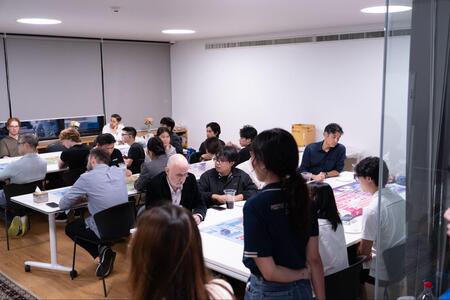
5. Team Culture Will Be Built Daily, Not Annually
Photo source: Unsplash – Team building activities
Traditional team building happens during quarterly events or annual retreats. AI will shift this to daily micro-interactions:
- AI-generated conversation prompts
- Gamified team-building activities
- Personalized recognition based on actual contributions
- Continuous culture feedback instead of surveys
Happily.ai’s platform creates 97% engagement through meaningful daily interactions, AI-driven conversations, and data-powered nudges that lead to sustainable culture change.[
happily]
What students should learn: how to build culture through consistency, use gamification for team engagement, and understand that culture is a daily practice.
The 7 Skills Students Must Learn Before Graduation
If you’re a student in 2026, here’s what you need to focus on:
1. AI Tool Literacy Across Multiple Functions
Don’t just learn one AI tool. Learn AI for:
- Writing and communication
- Data analysis and visualization
- Project management
- Design and creative work
- Coding and technical tasks
2. Async Communication Excellence
Write updates that are:
- Clear enough for AI to summarize
- Specific enough for team members to act on
- Concise enough to save time
3. Data Interpretation for Team Management
Understand how to read:
- People analytics dashboards
- Engagement metrics
- Performance data
- Culture health scores
4. Lean Team Operations
Learn how to:
- Work in smaller teams
- Automate coordination tasks
- Manage without traditional hierarchy
- Use AI for multiple roles
5. AI-Powered Decision Making
Master:
- Asking the right questions to AI
- Challenging AI responses
- Adding creativity to AI outputs
- Making decisions with AI as a partner
6. Continuous Culture Building
Build habits for:
- Daily team engagement
- Micro-recognition practices
- Consistent feedback loops
- Culture as a daily practice
7. Emotional Intelligence + AI Literacy
The future leader combines:
- Human empathy and understanding
- AI technical skills
- Data-driven decision making
- Behavioral change leadership
Happily.ai uses AI to develop human skills and emotional intelligence measurably—skills like empathy and self-awareness that are sometimes lacking more today than ever.[
youtube]
A 30-Day Action Plan for Students
Want to start preparing now? Here’s a simple plan:
Week 1: AI Tool Discovery
- Pick 3 AI tools (writing, project management, design)
- Use them daily for 15 minutes
- Document what works and what doesn’t
Week 2: Async Communication Practice
- Write 5 team updates that are clear and concise
- Practice summarizing meetings into bullet points
- Get feedback from teammates
Week 3: Data Literacy
- Learn to read one analytics dashboard (Google Analytics, project tool, etc.)
- Understand what metrics matter for teams
- Practice interpreting data for decisions
Week 4: Lean Team Simulation
- Join or create a small project team (3–5 people)
- Use AI for coordination and documentation
- Measure what you accomplish vs. traditional teams
The Bottom Line
Photo source: Unsplash – Future technology concept
The collaboration between Harbour.Space@UTCC and Happily.ai aren’t just about today’s team building—it’s about preparing students for the next decade of work.[
harbourspace.utcc.ac][
youtube]
AI won’t replace teams. But teams that don’t use AI will be replaced by teams that do.
For students: The skills you learn now will define your career in 2036. Start building AI literacy, async communication, and data-driven team management before graduation.
For educators: Programs like Harbour.Space@UTCC that treats AI as a classmate rather than just a tool are ahead of the curve.[
harbourspace.utcc.ac]
For the next 10 years: Team building will be more data-driven, more async, more lean, and more AI-powered. The question is whether you’re preparing for it or just watching it happen.
Ready to Start?
At Harbour.Space@UTCC, students learn by building startups, designing brands, and testing business models with AI by their side. Stay ahead by thinking smarter, not just faster.[
harbourspace.utcc.ac]
Want to dive deeper? Check out these related resources: