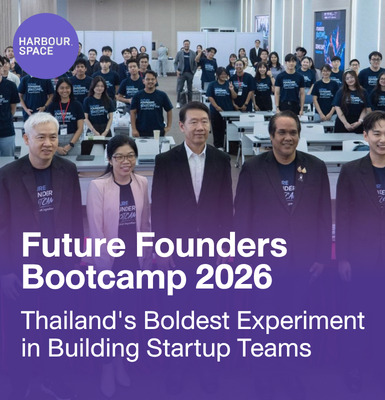
Future Founders Bootcamp 2026 – Thailand’s Boldest Experiment in Building Startup Teams
Student blog — 13/09/2026
Reading Time: 6 minutes
Most startup bootcamps follow the same formula. Gather ambitious students from one university, run workshops for a few weeks, end with a pitch competition, hand out certificates. Useful, but rarely transformative — because the teams that form look exactly like the classrooms they came from.
Future Founders Bootcamp 2026 was designed around a different idea: that the founders of the future cannot come from one discipline, so the teams should not either. And it has the institutional weight to test that idea properly.
What the Programme Is
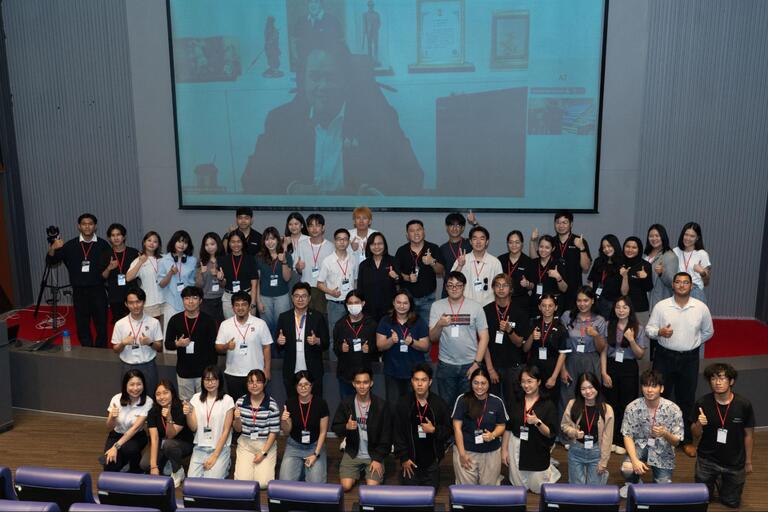
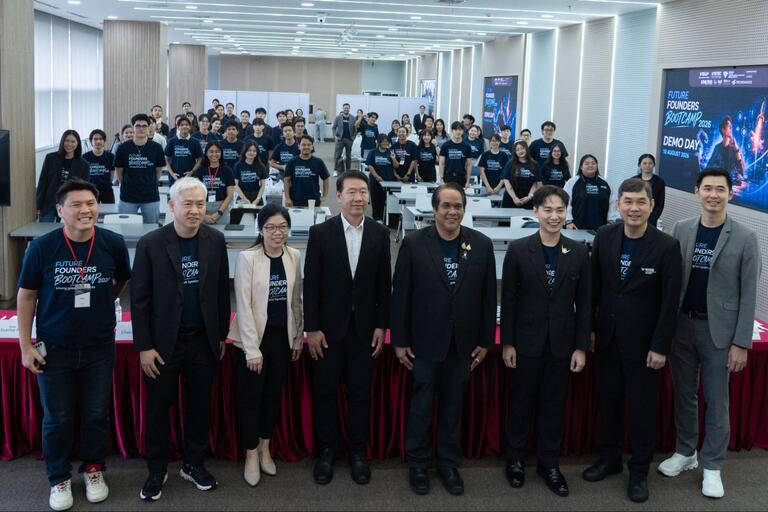
On 18 June 2026, the Ministry of Higher Education, Science, Research and Innovation (MHESI) presided over the signing of a memorandum of understanding for Future Founders Bootcamp 2026 at the headquarters of PTT, Thailand’s national energy company and the programme’s main sponsor [dailynews].
The MOU brings together three institutions, each contributing what it does best [dailynews][topnews]:
- VISTEC (Vidyasirimedhi Institute of Science and Technology) — the research pillar, taking participants into the EECi innovation area to work with advanced technology at the source
- Harbour.Space@UTCC — described at the signing as the “sandbox” of Thai education, contributing expertise in design and brand-building to shape raw ideas into something people want
- BUSEM (Bangkok University School of Entrepreneurship and Management) — the entrepreneurship engine, turning ideas into real businesses through a culminating Demo Day
Behind them stands a support network including VISUP, TED Fund, Techsauce, NIA, iNT, and KMUTNB, providing connections and funding pathways — with participants positioned for fast-track entry into national-level incubation programmes after the bootcamp ends [dailynews].
The Rule That Makes It Interesting
The detail worth paying attention to is a single condition: every team must combine students from all three institutions. A scientist from VISTEC, a designer or marketer from Harbour.Space@UTCC, an entrepreneur from BUSEM — mixed by design, not by chance [dailynews].
This sounds like a small logistical rule. It is actually the whole thesis of the programme. As the deputy permanent secretary of MHESI put it at the signing, the hardest challenge in Thai education today is breaking down the walls between disciplines and institutions — moving from textbook learning to an innovation ecosystem you can actually touch. The entrepreneurs of the future, in this framing, emerge from the combined force of science, business, and design talent working together [dailynews].
Anyone who has worked on a real product knows why this matters. A brilliant technology with no market understanding dies quietly. A beautiful brand wrapped around weak technology dies loudly. A business plan with neither is just a document. The teams that survive contact with reality are the ones that hold all three from day one.
Why Deep Tech, and Why Now
The programme is an expression of Thailand’s Deep Tech Commercialization policy — the push to take advanced research out of the lab and turn it into businesses that create value for the country [dailynews].
PTT’s involvement signals how seriously that push is being taken. The company framed the bootcamp as a stage for collaboration between technology, marketing, and investment — and stated its readiness to support the founding of deep tech businesses as a foundation for the country’s competitiveness and sustainable growth [dailynews][topnews].
The timing is not accidental. Thailand entered the top 50 of the Global Startup Ecosystem Index in 2026 for the first time in six years, ranking 4th in Southeast Asia — and was named the region’s strongest MedTech ecosystem [thestorythailand]. The infrastructure, capital, and attention are arriving. What the ecosystem needs next is founding teams capable of using them, which is precisely the gap this bootcamp is built to fill.
What Participants Actually Get
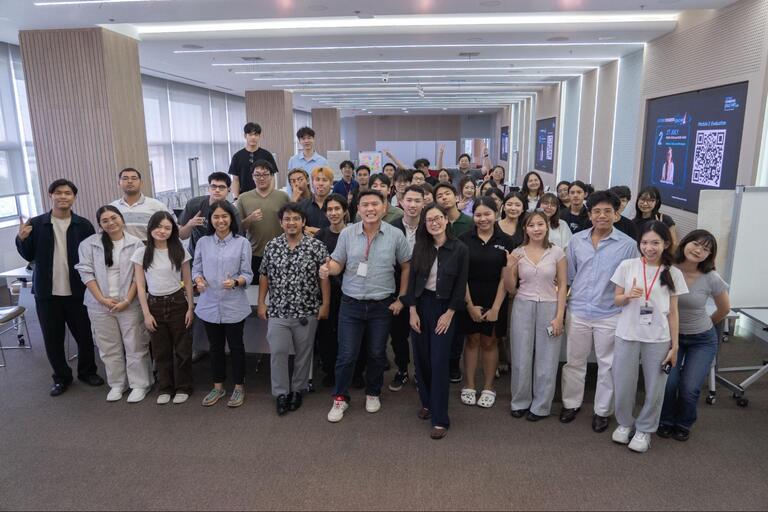
Reading between the lines of the programme structure, the value breaks down into four things:
Exposure to real technology. The VISTEC and EECi component means working with research-grade science rather than app ideas — the raw material of deep tech ventures that students rarely touch before graduate school.
Product and brand craft. The Harbour.Space@UTCC contribution addresses the most common failure of technical founders: building something impressive that nobody understands, wants, or remembers. Design and branding are not decoration on a deep tech venture. They are how invention becomes a product.
A forcing function. BUSEM’s Demo Day gives every team a deadline and an audience. Ideas that live in slide decks indefinitely never improve. Ideas pitched to a room full of people improve fast.
A network that persists. The fast-track pathway into national incubation programmes means the bootcamp is an entry point rather than an endpoint. For a student founder, that continuity — from first idea to funded programme — is usually the hardest thing to find alone.
The Bigger Signal for Students
Whether or not you ever join this specific bootcamp, it tells you something about where opportunity is moving. Government, a major corporation, and three very different universities agreed on one model: interdisciplinary teams, real technology, commercial pressure, and a pipeline to funding.
That is a description of the founder profile Thailand is deliberately trying to produce. Students who build cross-disciplinary skills now — a designer who understands technology, a scientist who can pitch, a marketer who can read a technical spec — are positioning themselves exactly where the country’s innovation policy is pointed.
The walls between disciplines are coming down whether individual students notice or not. The ones who notice first benefit most.
Ready to Follow Along?
The programme shares updates through its official Facebook page at Future Founders Bootcamp TH. If you are a student in science, business, or design wondering whether entrepreneurship is for you, watching how these mixed teams take an idea from lab to Demo Day is about the best free education available.
Related resources:
- From Code to Product – Combining Tech and Business
- Graduation and Demo Day – Student Projects in Practice
- 6 Reasons to Choose HSUTCC
Tags:
#FutureFoundersBootcamp, #Entrepreneurship, #DeepTech, #Thailand, #PTT, #VISTEC, #BUSEM, #StartupEcosystem #harbourspacebkk
All Links Used in This Post
Internal Links:
External Links: